
Is Air Duct Cleaning Worth It in Nashville? Yes — If Your System Matches What We Actually Find Here
Air duct cleaning is worth it for Nashville homes with visible contamination, heavy pollen accumulation, or aging ductwork — which describes most systems we inspect that haven’t been cleaned in five-plus years. For a well-maintained home with regular filter changes and no moisture issues, the payoff diminishes. The difference matters because Nashville’s basin-trapped pollen, 90°F-plus summers, and mix of 1970s ranch homes and vertical townhomes create contamination patterns that Northern climate studies never measured. Call (844) 839-1347 for a free, no-pressure assessment of whether your specific system warrants cleaning.

Why the National “Worth It” Debate Gets Nashville Wrong
The EPA study most homeowners cite when questioning duct cleaning value drew its conclusions from Canadian and Northern U.S. housing data — regions with shorter cooling seasons, lower pollen loads, and drier summers. Nashville sits in a geographic basin ringed by cedar and hardwood forests, and the Asthma and Allergy Foundation of America consistently ranks it among the nation’s worst cities for seasonal allergies. That pollen doesn’t stay outside. It enters through doors, windows, and fresh-air intakes, then circulates through ductwork for months.
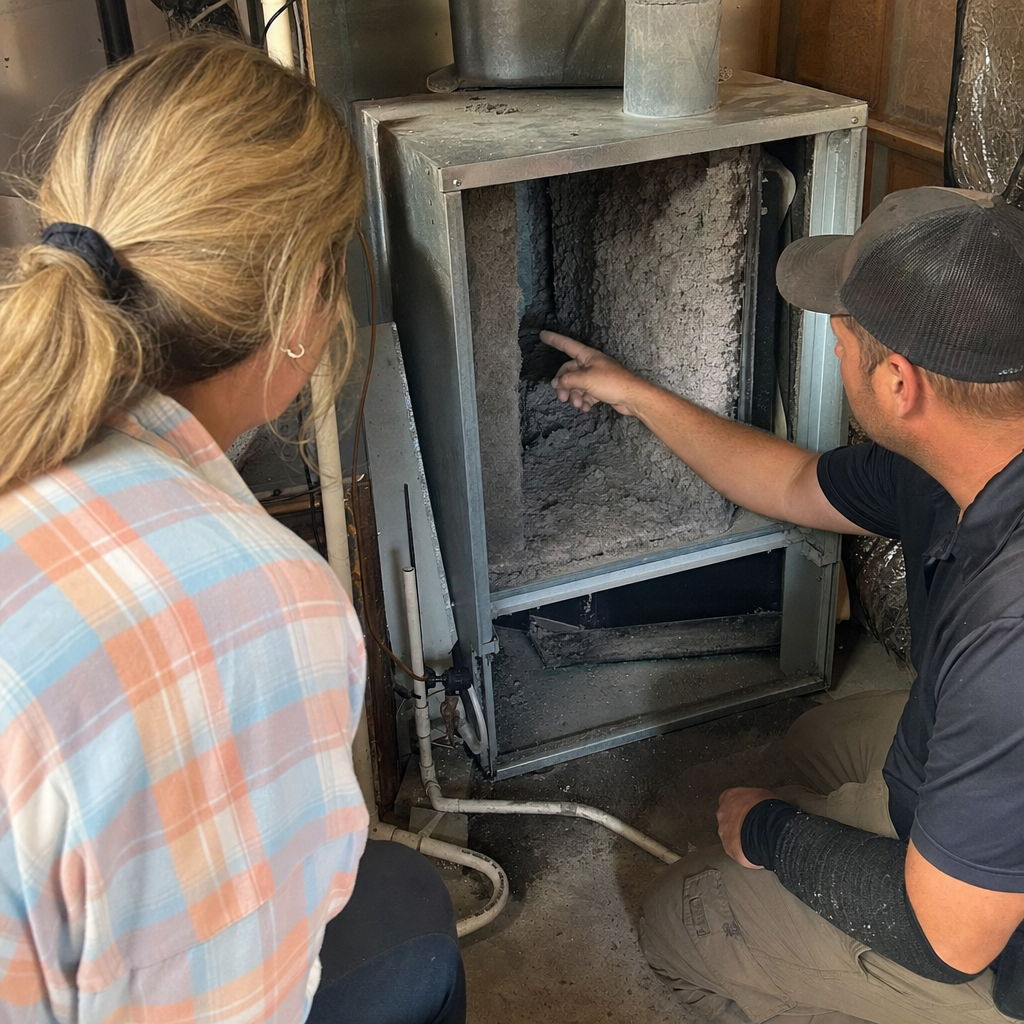
Here’s what that means practically: a return-air duct in a Donelson ranch home after one Nashville summer often contains a compressed mat of pollen, skin cells, and dust that weighs more than you’d expect. We’ve pulled material from 1970s flex duct in Hermitage that had never been cleaned — the homeowner’s “musty smell” complaint traced directly to biofilm growth on the interior surface, fed by humidity that stayed trapped in the system from June through September.
The EPA’s actual position, which gets oversimplified online, is that duct cleaning is warranted when systems contain mold, vermin, or heavy debris. In Nashville, “heavy debris” isn’t an edge case — it’s the baseline for homes built before 1990 with original ductwork, and it’s common enough in newer construction where builders’ dust wasn’t properly evacuated before occupancy.
What “Contaminated” Looks Like in a Nashville Return Duct
After 17 years of inspecting systems across Nashville, we’ve developed a straightforward threshold. A duct system warrants professional cleaning when we observe any of the following:
- Visible mold growth on interior surfaces — not “maybe mold” discoloration, but confirmed biological growth, usually in return plenums where humidity concentrates
- Debris accumulation restricting airflow — measured by static pressure testing, not guesswork; we document before-and-after readings with our Rotobrush and Nikro equipment
- Vermin evidence — droppings, nesting material, or insect casings, more common in crawl-space duct runs in older Madison and Antioch homes
- Post-renovation contamination — construction dust from Nashville’s relentless building activity, particularly problematic in the tight vertical chases of tall-and-skinny townhomes in The Nations and 12 South where drywall dust settles in supply runs
- Persistent allergy symptoms that improve when occupants leave the home — especially relevant given Nashville’s cedar pollen season, which runs February through April and leaves residue that standard 1-inch filters don’t capture
Clean ducts aren’t glamorous. Neither is good plumbing. Both matter.
The Nashville Housing Stock: Two Very Different Calculations
Treating every home identically produces the wrong answer on worth-it. Nashville’s housing splits into two distinct categories, and the duct cleaning calculus differs sharply between them.
1950s–1970s Ranch Homes: Donelson, Madison, Antioch, Hermitage
These homes — and I grew up in Donelson, not far from the old Opryland grounds, so I know them from the inside out — typically retain original flexible ductwork or early galvanized sheet metal. After 40–60 years, that flex duct sags between joists, separates at joints, and develops corrosion spots where condensation collects. The return plenum in these systems is often a simple plywood box in the crawl space, unsealed and pulling in whatever’s beneath the house.
For these homes, duct cleaning is almost always worth it if the system hasn’t been addressed in a decade. More importantly, cleaning often reveals repair needs — separated joints, collapsed runs, or corrosion — that are the actual source of efficiency and air quality problems. We handle Air Duct Cleaning through to duct repair and sealing because finding the problem without fixing it leaves the job half-done.
2012+ “Tall-and-Skinny” Townhomes: The Nations, East Nashville, 12 South, Germantown
The infill wave that reshaped gentrified Nashville neighborhoods created a ductwork challenge most technicians weren’t trained for. Supply runs squeeze through 3-story vertical chases with sharp 90-degree offsets at each floor transition. Standard rigid cleaning rods — the kind that work fine in a single-story ranch — bind at the first elbow or can’t navigate past the second floor.
We’ve invested in flexible-drive systems and camera verification specifically for these layouts. A technician who trained in Antioch ranch suburbs and shows up with standard equipment to a Germantown townhome is underprepared, and the homeowner pays for an incomplete job. The worth-it calculation here depends heavily on whether the contractor has the right equipment for the architecture — otherwise you’re paying for surface-level cleaning that misses the contamination trapped in upper-floor runs.
What Cleaning Actually Costs and Delivers in Nashville
Transparency matters because cookie-cutter quotes are a red flag. Pricing varies by system size, contamination level, and accessibility, but Nashville homeowners should expect these ranges based on what we quote daily for affordable air duct cleaning in Nashville, TN:
| Service Scope | Typical Range | What Affects Price |
|---|---|---|
| Standard residential duct cleaning (single system, up to 12 vents) | $350 – $550 | Number of vents, accessibility, contamination level |
| Larger homes or dual-zone systems | $550 – $850 | Additional air handler, extended duct runs, more return points |
| Dryer vent cleaning (recommended add-on) | $125 – $200 | Length of run, number of elbows, roof-vent vs. wall-vent termination |
| Duct repair/sealing (per issue found) | $150 – $400 | Location of damage, materials needed, crawl space vs. attic access |
| Air quality sanitizing with antimicrobial treatment | $75 – $150 | System size, whether applied post-cleaning or as standalone |
When the owner is the technician, accountability isn’t a policy — it’s personal. David Martinez serves as lead technician on every Horizon job, so the person quoting the work does the work. No rotating subcontractors, no “the crew will handle it” handoffs.
What Duct Cleaning Will NOT Do — And Why Honesty Sells
Overpromising damages trust more than admitting limitations. After 17 years and 501 verified reviews averaging 4.7 stars, we’ve learned that customers who understand boundaries become long-term relationships. Here’s what professional duct cleaning doesn’t accomplish:
- It won’t improve a system that’s already clean and well-maintained. If you’re changing MERV-11 filters quarterly and have no moisture issues, annual duct cleaning is maintenance overkill. We tell homeowners this directly.
- It doesn’t substitute for a functioning air filter. The best cleaning in the world won’t help if you’re running a clogged filter or bypassing filtration entirely. Filter maintenance is the foundation; cleaning addresses what gets past it.
- It won’t solve a humidity or mold source problem without addressing the source. If your crawl space has standing water or your attic lacks adequate ventilation, cleaning the ducts is temporary. We identify these conditions and recommend remediation — sometimes that means we don’t get the cleaning job because the real fix is structural.
- It doesn’t repair mechanical HVAC issues. A failing blower motor or refrigerant leak won’t be fixed by clean ducts. We separate air quality work from mechanical diagnostics and refer to HVAC contractors when the problem is outside our scope.
Our daughter had persistent allergy issues when she was young, and cleaning our own system was the first thing that made a real difference. That personal experience is why we got serious about indoor air quality — but it’s also why we don’t promise miracles. The right intervention for the right home produces measurable results. The wrong intervention, oversold, produces disappointed customers.
Equipment and Process: Why It Matters for the Worth-It Calculation
The “duct cleaning” label gets applied to a wide range of actual work quality. Consumer-grade shop vacuums with 20-foot hoses — the rental-center approach — don’t generate sufficient negative pressure to dislodge adhered debris or reach past the first few feet of trunk line. We’ve seen the aftermath: homeowners who paid $199 for a “whole system” cleaning that barely touched the supply registers.
Horizon uses professional-grade Rotobrush contact-cleaning systems and Nikro negative-air equipment — the same categories used by dedicated indoor air quality specialists, not generalist contractors adding duct cleaning as a revenue line. The process:
- Pre-inspection with camera — we show you what’s in the system before we touch it, so the worth-it decision is informed by evidence, not sales pressure
- Negative-pressure containment — the Nikro system creates suction at the air handler, so dislodged debris is captured rather than redistributed through the home
- Agitation and contact cleaning — Rotobrush whips and vacuum simultaneously, addressing adhered material that air pressure alone won’t move
- Register and return cleaning — often the most visibly contaminated components, especially returns near floors where Nashville’s pollen load settles
- Post-cleaning verification — camera documentation and, when relevant, static pressure comparison to confirm airflow improvement
We also integrate Aprilaire and Honeywell air quality products when the homeowner’s goals extend beyond cleaning to ongoing filtration or humidity control. The equipment names matter because they distinguish professional-grade work from the shop-vac shortcuts that give the industry its reputation problems.
Key Takeaways: When Duct Cleaning Is Worth It in Nashville
- Nashville’s basin-trapped pollen and continuous summer HVAC operation create contamination conditions that generic national studies don’t capture
- Homes with visible mold, vermin evidence, heavy debris, or post-renovation dust see measurable air quality improvement from professional cleaning
- 1970s ranch homes with original ductwork and tall-and-skinny townhomes with complex vertical chases face distinct challenges requiring different equipment and expertise
- Well-maintained systems with regular filter changes and no moisture issues show diminishing returns from frequent cleaning
- Owner-operator accountability and professional-grade equipment (Rotobrush, Nikro) separate worthwhile investment from wasted spend
FAQs
Standard residential duct cleaning in Nashville typically runs $350–$550 for a single system with up to 12 vents, with larger homes or dual-zone systems ranging $550–$850. For a detailed breakdown, see our guide to whole house air duct cleaning cost in Nashville, TN. The exact quote depends on vent count, accessibility, and contamination level — we assess in person before pricing, and estimates are free. Call (844) 839-1347 for a specific quote on your home.
Repair is usually more cost-effective for isolated issues — separated joints, localized corrosion, or sagging flex runs — while full replacement becomes warranted when ductwork is extensively deteriorated or improperly sized for the current HVAC system. In 1970s Nashville ranch homes, we often find that cleaning plus targeted sealing restores performance without the $3,000–$6,000 cost of full duct replacement. We evaluate each system individually and recommend repair when it genuinely solves the problem.
Yes — particularly given Nashville’s ranking among the nation’s worst cities for seasonal allergies. Cedar and hardwood pollen that enters the home gets recirculated through ductwork for months, and standard 1-inch filters capture only a fraction of these particles. We’ve had customers report reduced allergy symptoms within days of cleaning, especially when combined with upgraded filtration. That said, duct cleaning alone won’t help if the source is outdoor pollen entering through open windows; it’s one component of an overall air quality strategy.
For most Nashville homes, every 3–5 years is appropriate, with shorter intervals for homes with pets, recent renovations, or occupants with respiratory sensitivities. The combination of heavy pollen season and continuous summer humidity operation accelerates accumulation compared to drier, cooler climates. Homes with crawl-space ductwork or known moisture issues may need more frequent inspection. We don’t push annual cleanings on systems that don’t warrant them — 17 years of focused work has taught us that repeat business comes from honesty, not pressure.
Ready to Know What You’re Breathing?
If you’d rather have your specific system assessed than guess whether the “worth it” question applies to your home, Horizon Air Duct Cleaning Nashville offers a no-pressure inspection with camera documentation — you’ll see exactly what’s in your ducts before deciding on any service. Call (844) 839-1347 to schedule, or visit our home page to learn more about our full range of air quality services across Nashville.
Written by David Martinez, Owner & Lead Technician at Horizon Air Duct Cleaning Nashville, serving Nashville, TN.