
Air Duct Sanitizing Service in Nashville: What It Actually Does, What It Costs, and Why Sequence Matters
Air duct sanitizing service in Nashville typically runs $275–$550 for a whole-home treatment, but only after professional contact-cleaning removes the debris layer first — spraying sanitizer over dust and biofilm is cosmetic theater, not remediation. At Horizon Air Duct Cleaning Nashville, we won’t sell sanitizing as a standalone service because we’ve seen what happens when homeowners pay for antimicrobial fogging in dirty ducts: the organic material stays, the moisture stays, and the problem returns by next summer. Call (844) 839-1347 for a free estimate — we’ll show you what’s actually inside your system before recommending any treatment.
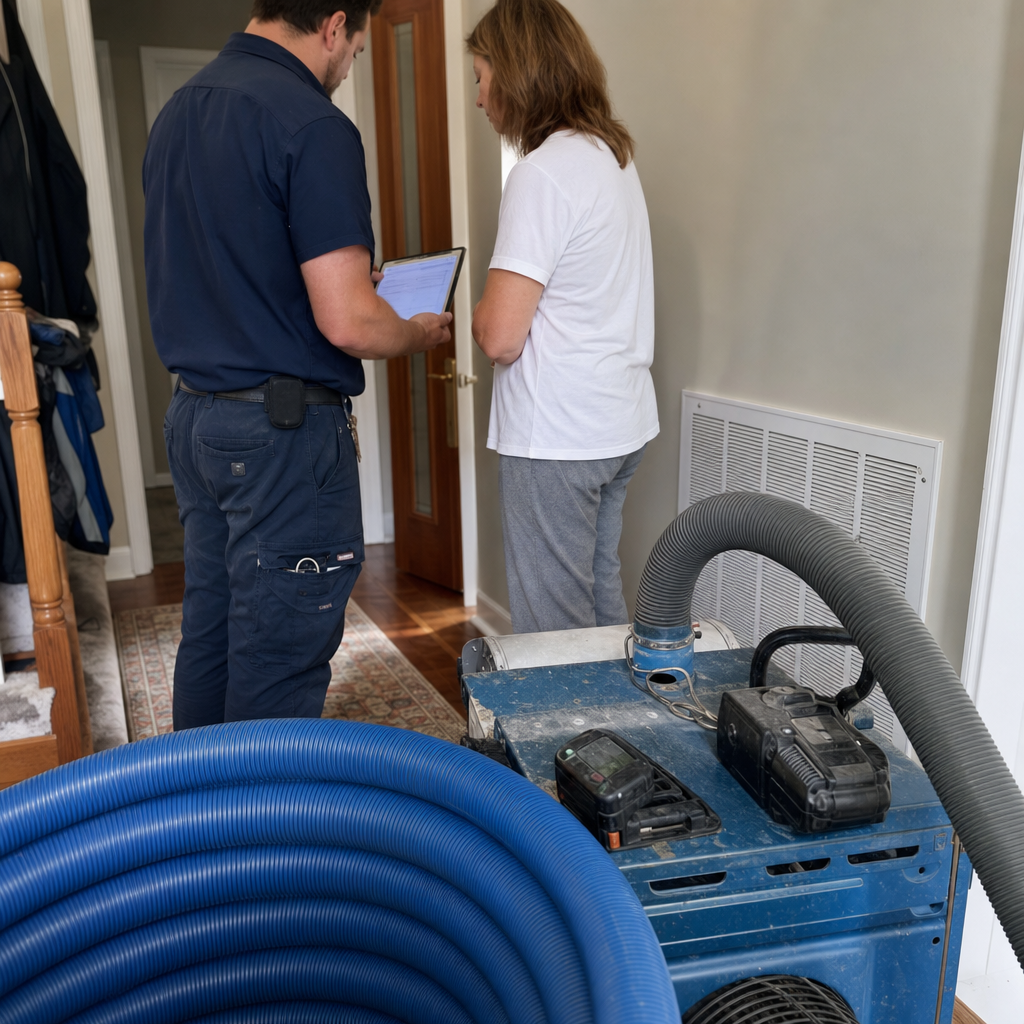
Nashville’s basin geography traps pollen, mold spores, and construction dust at ground level while our summers sustain 70%+ humidity for months on end. That combination means return ducts pulling moisture-laden air from June through September develop condensation-driven biological growth that’s genuinely common here — not an edge case, and not something a quick spray addresses permanently. We’ve spent 17 years cleaning ductwork in Donelson ranch homes with sagging flex duct from the 1960s and in three-story “tall-and-skinny” townhomes in The Nations with supply runs squeezed through vertical chases that standard equipment can’t navigate. The sanitizing conversation starts differently depending on what we’re looking at, but it always starts with what’s physically in the duct.
Why Sanitizing Order Matters: Sweep Before You Mop
Here’s the principle we operate by: spraying antimicrobial into dirty ducts is like mopping a floor before sweeping it. The sanitizer makes contact with the top layer of debris, maybe kills some surface organisms, and then the remaining dust, skin cells, pollen, and construction residue underneath continue feeding new growth. We’ve pulled sections of duct in Madison homes where a previous “sanitizing service” left a thin film of dried antimicrobial over an inch of packed debris — the customer paid for treatment, got a temporary odor reduction, and six months later had visible mold again because the food source never left.
The correct sequence is non-negotiable:
- Contact-cleaning first: Rotobrush and Nikro systems with agitation brushes and negative-air containment physically remove debris from duct walls — this is the “sweeping” that eliminates the organic material feeding biological growth
- Inspection post-cleaning: We document with photos what the surface actually looks like after debris removal, because sanitizing a clean metal surface produces entirely different results than sanitizing over residue
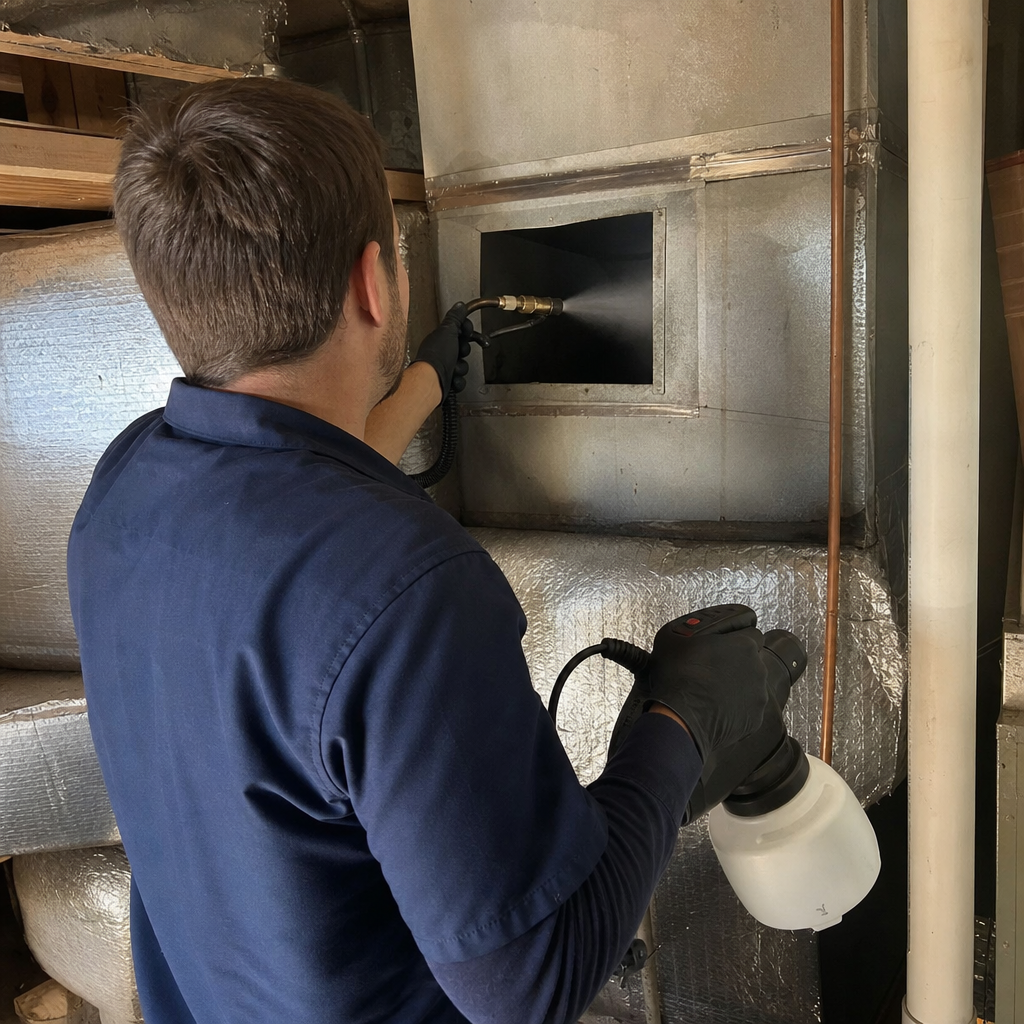
- EPA-registered sanitizing agent applied to clean surfaces: Proper contact time, proper concentration, and proper coverage — not a fogger waved at a vent
- Moisture source assessment: In Nashville, this is where we determine whether the job is finished or whether the conditions that created the growth are still active
David Martinez, our owner and lead technician, documents conditions before and after every sanitizing job — photos, locations, growth type — so customers have an actual record, not just a receipt. When the owner is the technician, accountability isn’t a policy — it’s personal.
Nashville’s Humidity Problem: Why Sanitizer Alone Isn’t Enough
This is the part most competitors skip, and it’s the reason we’ve built our sanitizing service around the full picture rather than a single treatment. Nashville’s summer return ducts pull 70%+ humidity air continuously from June through September. That isn’t a one-time water intrusion event — it’s a persistent wet interior surface condition that creates ideal territory for biofilm formation. EPA-registered sanitizers kill what’s present at application; they don’t alter the condensation cycle that will deposit new moisture tomorrow.
We’ve found mold in supply plenums of East Nashville townhomes where the HVAC contractor never properly sealed the chase penetration, allowing attic humidity to migrate directly into the duct envelope. We’ve found return trunks in Hermitage ranches with corroded sheet metal where the galvanizing failed decades ago and the raw steel weeps condensation all summer. In both cases, sanitizing without addressing the moisture pathway is a short-term fix with an expiration date.
That’s where our Air Quality & Sanitizing capability extends beyond the treatment itself. Because we work with Aprilaire and Honeywell whole-home dehumidification and enhanced filtration systems, a customer who needs sanitizing can also address the underlying humidity and filtration problem in the same visit — reducing the future biofilm formation that would otherwise bring us back next year for the same conversation.
What We Use and Why It Differs from DIY
The EPA-registered sanitizing products we apply — from Abatement Technologies and Guardsman lines formulated for HVAC systems — operate on mechanisms that consumer foggers and off-the-shelf sprays don’t replicate. The meaningful variables are contact time, concentration stability, and residual effect on clean surfaces:
| Treatment Component | Horizon Process | Typical DIY/Discount Alternative |
|---|---|---|
| Pre-treatment surface prep | Contact-cleaning with Rotobrush/Nikro agitation and negative-air containment | Minimal or no debris removal; fogger applied over dust layer |
| Product concentration | Hospital-grade EPA-registered formulation mixed to manufacturer spec for HVAC application | Consumer-label product at variable dilution |
| Contact time | Dwell time per manufacturer protocol on accessible surfaces; reapplication at register and trunk access points | Brief fogger mist with no controlled dwell |
| Moisture assessment | Inspection for condensation sources, chase sealing, and humidity loading; Aprilaire/Honeywell solutions offered | None; treatment sold as complete solution |
| Documentation | Before/after photos with location notes | Invoice only |
Clean ducts aren’t glamorous. Neither is good plumbing. Both matter.
What Air Duct Sanitizing Service Costs in Nashville
Pricing for affordable air duct sanitizing depends on system size, accessibility, and whether we’re treating after a full cleaning or addressing a specific contamination event. These are the ranges we quote for Nashville-area homes:
| Service | Price Range |
|---|---|
| Whole-home sanitizing (after Horizon cleaning) | $275–$400 |
| Whole-home sanitizing (requires pre-cleaning) | $450–$700 (cleaning + sanitizing bundled) |
| Targeted sanitizing (single zone/area of concern) | $175–$275 |
| Sanitizing + Aprilaire/Honeywell dehumidifier consultation | $275–$400 + equipment quote |
| Post-renovation sanitizing (heavy construction dust loading) | $350–$550 |
We don’t quote sanitizing without seeing the system because “whole-home” means different things in a 1,200-square-foot Donelson ranch with exposed crawl ductwork versus a three-level townhome in 12 South with supply runs through finished chases. Call (844) 839-1347 — estimates are free, and we’ll tell you honestly whether your situation warrants sanitizing or just a thorough cleaning with better filtration.
How to Tell If You Actually Need Sanitizing Versus Just Cleaning
Not every dirty duct needs antimicrobial treatment. We’ve cleaned systems in Antioch that were packed with decade-old dust and pollen but showed zero biological activity — a thorough contact-cleaning with proper filtration upgrade was the right scope. We’ve also opened return trunks in Germantown where the customer described a “musty smell when the AC kicks on” and found active biofilm colonization that cleaning alone wouldn’t resolve.
Here are the conditions that push us toward recommending sanitizing:
- Visible mold or mildew in registers, trunk lines, or accessible plenum areas — we photograph what we find before touching it
- Persistent musty odor that returns within days of standard cleaning, indicating biological source rather than accumulated debris
- Post-water-intrusion or post-flood event where mold growth is suspected in inaccessible duct sections
- Post-renovation scenarios where drywall dust and moisture created favorable conditions during construction
- Occupants with documented mold sensitivity or compromised immune systems where the threshold for treatment is appropriately lower
Conversely, we actively discourage sanitizing when the duct system has significant standing water, active leaks, or unsealed chase penetrations introducing attic humidity — treating the symptom while the cause operates uninterrupted wastes the customer’s money and our reputation.
Equipment and Technique: Why “Tall-and-Skinny” Nashville Homes Change the Math
Nashville’s building boom since 2012 produced thousands of narrow infill townhomes in The Nations, East Nashville, and 12 South with ductwork routed through tight vertical chases. Standard rigid cleaning rods bind at the sharp 90-degree offsets between floors — we’ve seen technicians who trained in flat ranch suburbs show up with equipment that can’t reach past the first elbow, declare the job done, and leave the upper floors untreated.
Our Rotobrush and Nikro systems include flexible-shaft and pneumatic tools designed for exactly these geometries. When David Martinez arrives as lead technician, he’s selecting equipment based on the home’s construction era and duct routing — not running the same setup regardless of what the walls contain. For the best air duct sanitizing in these homes, the application method changes too: we need access points that let us treat the full vertical run, not just the registers, or we’re sanitizing the bottom third of a three-story system and calling it complete.
This matters for pricing because a “whole-home” sanitizing quote that doesn’t account for chase accessibility is either overcharging for partial treatment or underbidding and eating costs. We’d rather see the layout first.
FAQs
Whole-home air duct sanitizing in Nashville typically costs $275–$550 depending on system size, accessibility, and whether contact-cleaning is needed first. A targeted single-zone treatment runs $175–$275, while post-renovation or heavy contamination scenarios range $350–$700 when bundled with required pre-cleaning. Call (844) 839-1347 for an exact quote — estimates are free.
EPA-registered sanitizers kill mold and mold spores on contact when applied to clean surfaces at proper concentration and dwell time, but they do not remove dead mold material or address the moisture source that allowed growth. In Nashville’s humid climate, we find that sanitizing without fixing condensation-prone return ducts or humidity loading is a temporary fix — the biological conditions return. We document what we find and offer Aprilaire or Honeywell dehumidification solutions when the moisture pathway needs addressing.
Cleaning alone is cheaper and sufficient when the system contains only accumulated dust, pollen, and debris without active biological growth. We recommend adding sanitizing when we document visible mold, persistent musty odor, post-water-intrusion conditions, or occupant health factors that warrant the additional treatment. We’ll show you what we find before recommending either scope — we don’t upsell treatments that don’t match the actual condition.
Most whole-home sanitizing treatments take 1.5–2.5 hours after cleaning is complete, with a 2–4 hour recommended wait before running the system to allow proper dwell time and ventilation. We schedule the work so you’re not stuck without climate control overnight, and we’ll tell you the specific re-entry time based on the product applied and your home’s ventilation characteristics. Call (844) 839-1347 to book a morning slot if same-day system restoration matters for your schedule.
Ready to See What’s Actually in Your Ducts?
We’ve spent 17 years building Horizon on a straightforward principle: show the homeowner what’s in the system before and after, use truck-mounted negative-pressure equipment, and don’t oversell treatments people don’t need. Our 501 verified reviews at 4.7 stars reflect customers who got honest assessments, not pressure for add-ons they didn’t need. If you’re dealing with musty odors, visible growth, or post-renovation concerns in your Nashville home, call (844) 839-1347 for a free estimate — David Martinez will arrive as your lead technician, document what he finds, and recommend only the scope that matches your system’s actual condition.
Written by David Martinez, Owner & Lead Technician at Horizon Air Duct Cleaning Nashville, serving Nashville, TN.