
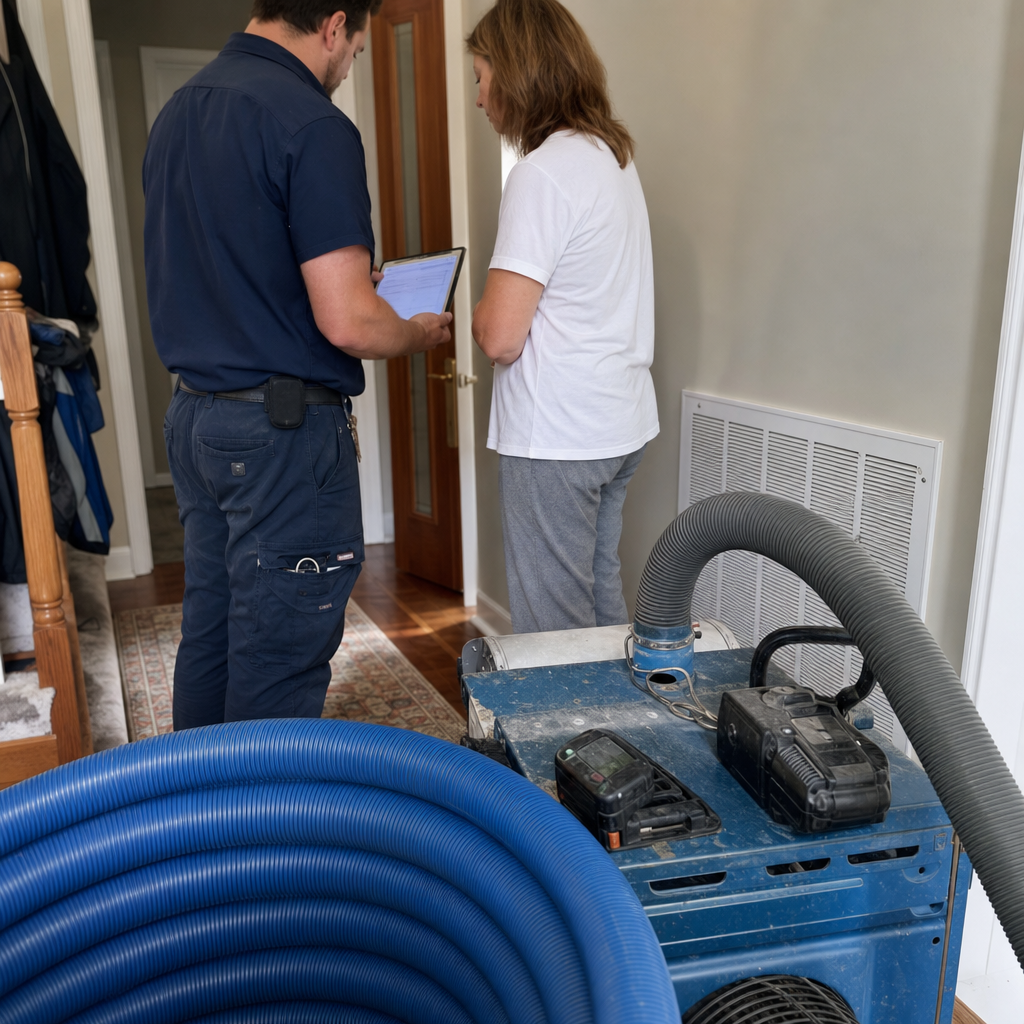
Duct Sealing Cost in Nashville, TN: What You’ll Actually Pay in 2024
Duct sealing in Nashville typically runs $450–$1,200 for a standard single-family home, with most ranch-style houses in Madison or Antioch landing in the $550–$850 range, though How Much Does Duct Repair & Sealing Cost? (2026 Price Guide) — Nashville, TN covers the full pricing landscape. If your ductwork has physically separated at the joints—a common find in 1960s-era homes across Hermitage and Donelson—the job becomes repair-plus-sealing, pushing costs to $800–$1,800. Call (844) 839-1347 for a free, in-home assessment; David Martinez, our owner and lead technician, handles every quote personally.
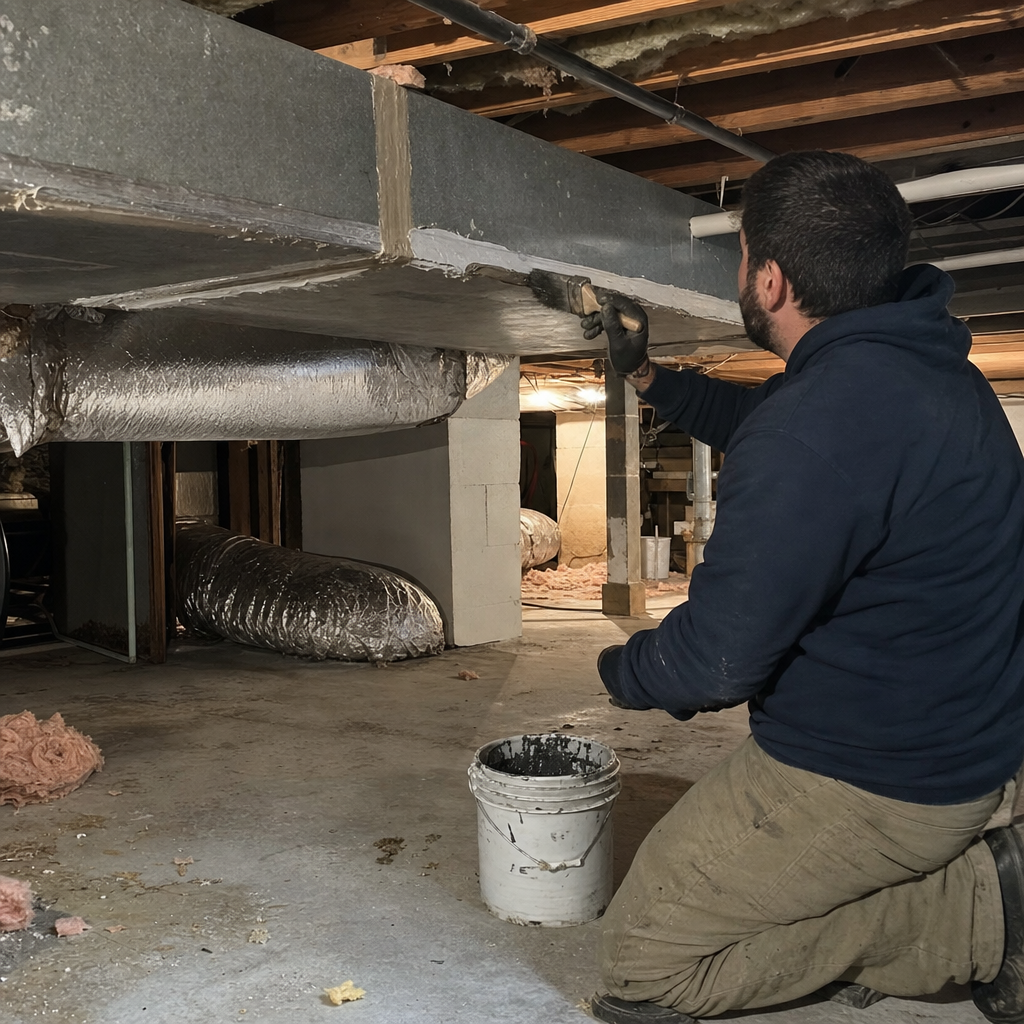
Nashville’s basin geography traps pollen and humidity against the Cumberland River valley floor, and our summers stick above 90°F with 70% relative humidity for months straight. That combination means your HVAC system works harder than it should if conditioned air is bleeding into your crawlspace or attic through gaps the previous owner never addressed. We’ve spent 17 years tracking down those leaks in homes from Donelson to The Nations, and the cost question always depends on whether we’re sealing intact ductwork or rebuilding connections that have already failed.
Why “Duct Sealing Cost” Means Two Different Jobs in Nashville
A separated duct joint in a 1965 Hermitage ranch isn’t a sealing problem—it’s a repair problem. Quoting mastic sealant on a duct that’s physically disconnected is like caulking a gap in a wall that’s already fallen over. We see this mismatch constantly in Nashville’s older neighborhoods, where original flexible ductwork has sagged, pulled apart at collars, or corroded through after six decades of humidity cycling.
Here’s how we break down what you’re actually paying for:
- Tier 1: Sealing intact but leaky ductwork — Mastic sealant, foil tape, or aerosol-based sealing applied to accessible joints and seams where the ductwork is structurally sound but air is escaping through gaps, pinholes, or failed tape. Typical in homes with 1990s-or-newer systems that were never properly sealed at installation.
- Tier 2: Repair before sealing — Reconnecting separated flex duct runs, replacing collapsed or rodent-damaged sections, rebuilding corroded sheet-metal connections, or supporting sagging runs with proper strapping before any sealant touches the system. This is the reality in a significant share of Nashville’s 1950s–1970s ranch stock.
The confusion between these two tiers is why online “average duct sealing cost” figures are nearly useless for Nashville homeowners. A $400 mastic-sealing quote assumes your ducts are fundamentally intact. If your return plenum has dropped an inch off the air handler collar—something we find regularly in crawlspaces across Madison and Antioch—that quote becomes meaningless once the technician actually looks.
What Duct Sealing Costs in Nashville: Line-Item Pricing
We don’t quote blind, but after 17 years and 501 verified reviews, we’ve got enough data to show realistic ranges. These figures reflect what Nashville homeowners actually pay for Duct Repair & Sealing work, not theoretical national averages.
| Service Item | Low Range | High Range | Typical Nashville Scenario |
|---|---|---|---|
| Mastic sealing, accessible ductwork (single system) | $450 | $750 | Ranch home, crawlspace access, intact flex duct with joint gaps |
| Aerosol duct sealing (Aeroseal-style) | $1,200 | $2,500 | Multi-story home with limited access; seals from inside |
| Flex duct reconnection + sealing (per run) | $180 | $340 | Separated collar at air handler or branch split |
| Flex duct replacement + sealing (per run) | $280 | $520 | Sagging, crushed, or rodent-damaged section in crawlspace |
| Sheet-metal repair + sealing | $350 | $680 | Corroded plenum or trunk line in older Donelson/Hermitage home |
| Full system: repair + seal, ranch home | $850 | $1,400 | Multiple separated joints, some replacement, complete seal |
| Full system: repair + seal, tall-and-skinny townhome | $1,100 | $1,800 | 3-story vertical chase access, tight quarters, multiple floor transitions |
These ranges assume standard residential HVAC systems. Commercial ductwork, historical homes with custom fabrication needs, or systems requiring extensive access remediation (cutting drywall in finished basements, for example) sit outside these brackets.
The Hidden Cost of Leaky Ducts in Nashville’s Climate
Here’s what most cost guides won’t tell you: in Nashville’s humidity, leaky ductwork doesn’t just waste money on your electric bill. It actively damages your system.
When supply ducts leak into a 140°F attic in July, your air handler loses pressure and runs longer to hit thermostat setpoints. That extended runtime pulls more moisture across the evaporator coil, and if the coil can’t drain properly—or if return leaks are pulling humid crawlspace air directly into the system—you get condensation pooling in places it shouldn’t. We’ve opened air handlers in Antioch homes where the interior cabinet was lined with biofilm that started as a drip tray overflow, compounded by a return duct pulling 85% RH air through a gap no one had bothered to seal.
The energy math is straightforward enough. A typical Nashville home loses 20–30% of conditioned air to duct leakage according to DOE estimates, and our summer cooling loads are among the highest in the Southeast. At $0.12–$0.14 per kWh across Middle Tennessee, that leakage can add $40–$80 to a monthly summer electric bill in a 2,000-square-foot home. Over three or four months, you’ve paid for a mid-range sealing job in wasted electricity alone—before counting the accelerated wear on your compressor and the indoor air quality hit from pulling unfiltered attic or crawlspace air into your living space.
And Nashville’s pollen load makes that last point especially relevant. The Asthma and Allergy Foundation of America ranks this city among its perennial “Allergy Capitals,” and our basin geography traps those loads at ground level. A return duct with a ¼-inch gap at a crawlspace junction is functionally a vacuum hose for whatever’s down there: mold spores from damp joist bays, fiberglass degradation from old insulation, rodent droppings, construction dust from that 2019 renovation the previous owner half-finished. Clean ducts aren’t glamorous. Neither is good plumbing. Both matter.
How We Assess Whether You Need Sealing, Repair, or Both
Our evaluation process is built around not misquoting tier 1 work when tier 2 is needed. David Martinez handles every assessment personally—when the owner is the technician, accountability isn’t a policy, it’s personal.
Here’s what actually happens when we show up:
- Visual inspection of accessible ductwork — Crawlspace, attic, mechanical room, and any interior chases we can reach without demolition. We’re looking for separated collars, sagging flex runs, corroded sheet metal, and signs of past water intrusion.
- Pressure differential assessment — We measure static pressure at the air handler and compare it to design specifications for your system. A significant drop indicates leakage volume, though not location.
- Smoke pencil or theatrical fog testing — At the air handler and major junctions, we introduce visible tracer to spot leakage points that aren’t obvious to the eye—especially useful at flex-to-collar connections where gaps may be small but cumulative.
- Access evaluation for tall-and-skinny configurations — In newer Nashville townhomes with vertical chases, we determine whether we can reach joints with our Nikro negative-air equipment and Rotobrush contact-cleaning systems, or whether limited access changes both technique and pricing.
The critical distinction: we don’t apply sealant to whatever’s visible from the access panel and call it done. If your trunk line has dropped two inches off the plenum, sealing the gap with mastic is a temporary patch at best. We flag the structural issue, quote the Affordable Duct Repair & Sealing in Nashville, TN honestly, and explain why the two-stage approach protects your investment.
Why Nashville’s Housing Stock Makes “Standard” Quotes Unreliable
Nashville’s construction patterns create genuine variability in duct sealing scope. On the same day, we might finish a straightforward mastic-sealing job in a 2018 Berry Hill townhome with accessible mechanical closets, then drive to a 1962 ranch in Hermitage where every flex run has sagged to the crawlspace floor and three collars have pulled completely free.
The tall-and-skinny wave adds its own complexity. These 3-story spec townhomes in The Nations, East Nashville, and 12 South route supply runs through vertical chases with sharp 90-degree offsets at each floor transition. Standard rigid cleaning rods bind at the first elbow; our Rotobrush and Nikro systems are specifically selected to handle these confined configurations, but the access challenge means more time, different techniques, and adjusted pricing compared to a flat ranch layout.
We’ve also found that technicians who trained exclusively in older suburban stock often underestimate what tall-and-skinny jobs require. A crew accustomed to crawling through Antioch crawlspaces with plenty of headroom can find themselves stuck at a second-floor chase access with equipment that won’t make the turn. That’s not a situation we put our customers in—David’s 17 years in Nashville have included deliberate adaptation to both housing eras.
Equipment and Materials: What the Price Actually Covers
Our sealing work uses professional-grade materials, not hardware-store shortcuts:
- Water-based duct mastic — Applied with brush or gloved hand to all accessible joints; remains flexible through thermal cycling, unlike tape alone.
- Reinforced foil tape (UL 181A-P/B-FX listed) — Used for sealing seams and as a mechanical backup to mastic at high-stress joints; not the cloth-backed “duct tape” that degrades in months.
- Nikro negative-air systems — For pre-sealing cleaning when ducts contain significant debris; sealing over contamination traps it against the surface.
- Rotobrush contact-cleaning equipment — Used in vertical chases and tight configurations where negative-air reach is limited.
For homes with extensive leakage or limited access, we also evaluate whether aerosol-based sealing (marketed under various brand names) is appropriate. This technique pressurizes the duct system and introduces sealant particles that accumulate at leak points. It’s effective for inaccessible leaks but requires temporary sealing of registers and returns, and it sits at the higher end of our pricing table. We recommend it selectively, not as a default upsell.
FAQs
Most Nashville homeowners pay $550–$850 for standard mastic sealing of intact ductwork in a single-system ranch home, while jobs requiring repair of separated joints or damaged runs typically run $800–$1,400. Tall-and-skinny townhomes with vertical chase access often land at $1,100–$1,800 due to confined-space work requirements. Call (844) 839-1347 for an exact quote—estimates are free, and David Martinez evaluates every job personally.
Sealing intact ductwork is almost always cheaper than replacement, but replacement becomes more economical when multiple runs are physically separated, crushed, or degraded by rodent damage or corrosion. In Nashville’s 1950s–1970s ranch stock, we frequently find that partial replacement of two or three failed runs plus sealing the remainder costs less than attempting to salvage deteriorated flex duct with repeated repair calls. We’ll show you the condition during our assessment and price both approaches honestly.
Yes—duct leakage of 20–30% is common in homes that have never been sealed, and in Nashville’s climate that translates directly to longer compressor runtime during our extended cooling season. We’ve had customers in Madison and Antioch see summer bill reductions of $50–$90 monthly after comprehensive sealing, especially when combined with correcting return-side leaks that were pulling 85°F+ crawlspace air into the system. The payback period on sealing work often falls between two and four cooling seasons.
Signs of simple leakage include uneven room temperatures, excess dust near registers, and higher-than-expected utility bills with no equipment malfunction. Signs that repair is needed include visible sagging or separation at crawlspace joints, collapsed flex runs, water staining near duct connections, or a sudden spike in dust after years of stable conditions. Our assessment distinguishes between the two before we quote—David Martinez doesn’t price sealing work until he’s verified your ductwork is structurally capable of holding the seal.
Ready to Stop Paying to Cool Your Crawlspace?
Seventeen years in Nashville has taught us that duct sealing quotes only matter if they’re based on what your system actually needs—not a generic menu price that changes once the technician sees the crawlspace. We’ll assess your ductwork honestly, explain whether you’re looking at tier 1 sealing or tier 2 repair-plus-seal, and give you a number that doesn’t shift when the work starts, which is why homeowners choose us for the Best Duct Repair & Sealing in Nashville, TN. Call (844) 839-1347 for your free estimate. David Martinez handles every assessment, and we back our work with 501 verified reviews averaging 4.7 stars from homeowners who’ve seen the difference that owner-operated accountability makes.
Written by David Martinez, Owner & Lead Technician at Horizon Air Duct Cleaning Nashville, serving Nashville, TN.